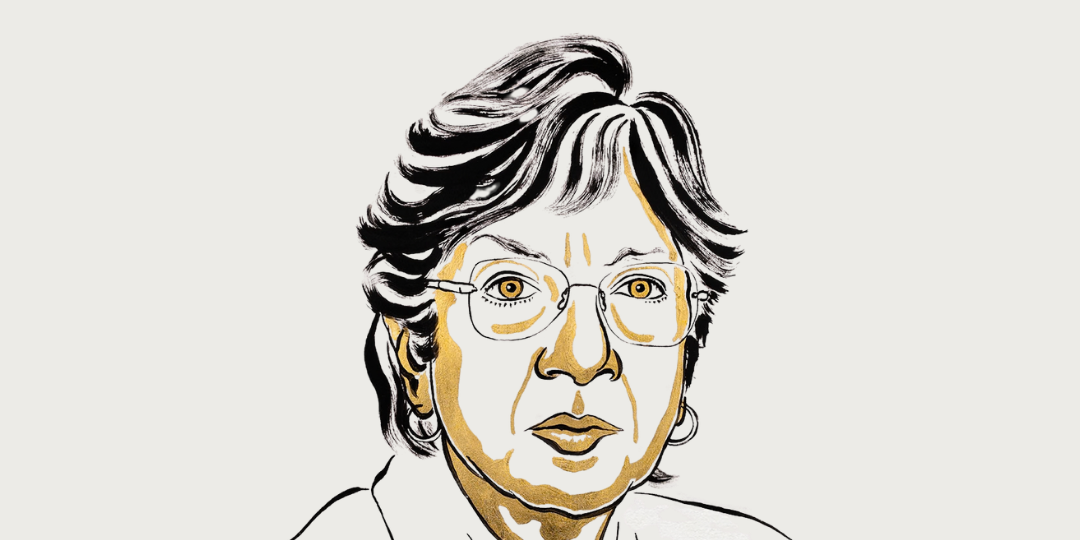
The Ahmed Kathrada Foundation extends its warmest, most enthusiastic congratulations to South African legal pioneer and international jurist, Judge Navanethem “Navi” Pillay, on being awarded the 2026 Nobel Peace Prize.
This historic accolade is a profound validation of a lifetime dedicated to the relentless pursuit of human rights, equality, and the global rule of law. From her early days as a trailblazing anti-apartheid attorney defending political prisoners on Robben Island, to her service as the United Nations High Commissioner for Human Rights, Judge Pillay has consistently stood as an unyielding bulwark against tyranny and systemic oppression.
A Deserving Laureate vs. the Vanity of Power
This award serves as a powerful reminder of what true peacebuilding requires. In recent years, the world has witnessed the spectacle of powerful political figures—most notably U.S. President Donald Trump—openly craving, lobbying for, and obsessing over the Nobel Peace Prize as a transactional tool for personal validation and political branding. True peace is not forged through hyper-nationalist rhetoric, unilateralism, or the transactional deal-making craved by populists. It is earned through the painful, courageous work of dismantling injustice, defending the vulnerable, and holding the powerful accountable to a singular standard of international law. While politicians seek the prize to elevate their own status, Judge Pillay’s entire career has been spent elevating the status of the voiceless.
Confronting the global spectre of authoritarianism requires looking honestly at where the danger lies, as this modern threat is no longer confined to traditional dictatorships but increasingly targets the United States itself. Through the degradation of democratic norms, systematic attacks on an independent media, the manipulation of executive actions, and the erosion of the rule of law, the world’s largest superpower increasingly mirrors the institutional decay of unstable regimes. When the United States compromises its own democracy internally while exerting immense military and economic dominance globally, it amplifies the threat of authoritarianism across the entire planet, proving that true global peace requires a rules-based order that applies equally to everyone—whether a developing nation or an imperial superpower.
Furthermore, this global recognition forcefully exposes the absurdity of right-wing propaganda engineered by Trump and his allies, who have repeatedly peddled malicious, manufactured narratives about a “white genocide” in South Africa to rally their conservative base. By awarding the world’s highest peace honour to a South African jurist celebrated for her meticulous, data-driven methodology in defining and prosecuting actual genocides, the international community has delivered a resounding rejection of these cynical falsehoods. True jurisprudence deals in verifiable truth, not the paranoid, racially divisive myths manufactured for imperial political gain.
Honouring a Deep Connection: The 2011 Foundation Lecture
Judge Pillay’s connection to our late founder, Ahmed Kathrada, and our ongoing struggle against injustice runs deep. In October 2011, she returned home to Johannesburg to deliver the momentous Second Annual Ahmed Kathrada Foundation Lecture. Speaking as the sitting UN High Commissioner for Human Rights, her words on the global struggle against intolerance remain chillingly prophetic today:
“Xenophobia, racism and intolerance have increased in parts of the world. We see it manifested in the treatment of migrants, refugees, and minorities who are scapegoated for economic anxieties. True freedom can never coexist with the degradation of another human being. We must remain vigilant, both in South Africa and globally, because systems of prejudice are adaptive and will always find new ways to divide us if we allow them to.”
A Lifetime on the Frontlines of Global Justice
Judge Pillay’s selection by the Norwegian Nobel Committee arrives at a critical juncture in human history, where multilateralism is under siege and “might over right” threatens global stability. Her fearless legacy spans continents:
- Palestine: As Chair of the UN Independent International Commission of Inquiry on the Occupied Palestinian Territory, Judge Pillay exhibited extraordinary moral clarity. In a landmark determination, her panel courageously concluded that Israel has committed genocide against Palestinians in the Gaza Strip. Despite immense political pressure from powerful Western states, she maintained that responsibility for these atrocity crimes lay at the highest echelons of power, refusing to back down in her defense of international humanitarian law.
- Sri Lanka: During her tenure as UN High Commissioner for Human Rights, she fiercely championed accountability for victims of the civil war in Sri Lanka, calling out state-sponsored violations and pushing for independent war crimes investigations despite heavy political blowback.
- Rwanda & Global Jurisprudence: As a judge and President of the International Criminal Tribunal for Rwanda, Pillay was instrumental in delivering the groundbreaking verdict that legally defined rape and sexual violence as acts of genocide and crimes against humanity—forever altering international law.
The Measure of True Worthiness: Why This Matters
What makes Judge Pillay uniquely worthy of the Nobel Peace Prize is that her contributions are not defined by singular diplomatic breakthroughs or fleeting political handshakes. Her worthiness lies in a lifetime of systematic, foundational architecture for global justice. She did not merely advocate for peace; she built the precise legal mechanisms required to enforce it. By permanently embedding protections for women into international criminal law and refusing to shield superpowers or their allies from accountability, she transformed human rights from a set of abstract moral ideals into enforceable international realities.
In a fragmented world where international institutions are routinely ignored or weaponised by the powerful, honouring Judge Pillay is a vital defence of multilateralism itself. Her legacy proves that true, sustainable peace cannot exist without justice, accountability, and the rule of law. At a time when global cynicism is at an all-time high, her recognition re-anchors the Nobel Peace Prize to its truest purpose: honouring those who sacrifice personal comfort to establish a fairer, more humane global order.
Reclaiming the Rule of Law in Contemporary Times
Today, both domestically and globally, we face an era of rising authoritarianism, legal cynicism, and devastating conflicts from the Middle East to Eastern Europe. In South Africa, as we navigate our own contemporary challenges of inequality, social cohesion, and the defence of constitutional democracy, Navi Pillay remains a guiding light. Her moral compass proves that legal frameworks are not abstract ideals but the ultimate line of defence against chaos and fascism.
As Uncle Kathy always reminded us, freedom and justice are never permanently secure; they require constant vigilance. Judge Navi Pillay has lived that vigilance. We celebrate our fellow compatriot today, knowing that this Nobel Peace Prize honours a legacy built not on the pursuit of applause, but on an unwavering dedication to truth.
Enquiries:
The Ahmed Kathrada Foundation
Email: info@kathradafoundation.org
Office no: +27 11 854 0082
Johannesburg, South Africa