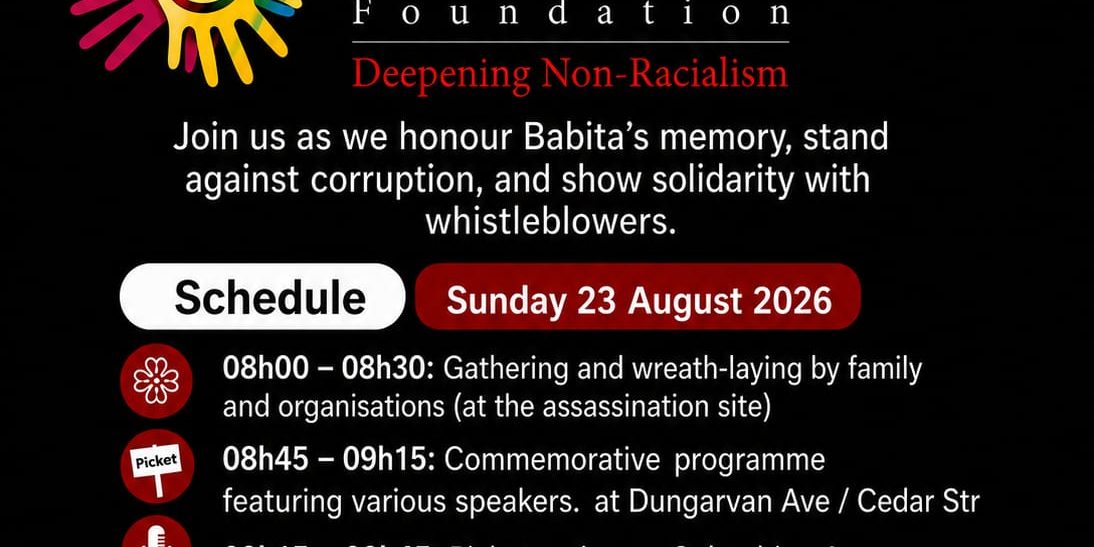
Five years ago today, the quiet of a Winchester Hills morning was shattered by a hail of
bullets. As Babita Deokaran sat in her car outside her home, she was executed. She was not a
politician, a tycoon, or a gangster. She was an accountant. She was a civil servant. She was a
woman who looked at a ledger at Tembisa Hospital, saw a multi-million-rand theft network
systematically bleeding the state dry, and decided to do something completely revolutionary
in modern South Africa: her job.

Babita was murdered because of a simple math problem. She discovered that the procurement
system was being weaponized. By intentionally splitting massive, multi-million-rand tenders
into hundreds of smaller transactions valued just under R500,000, organized syndicates were
completely bypassing the National Treasury’s oversight. This “split-invoicing” loophole
allowed corrupt or negligent hospital bosses to sign off instantly on ridiculous, inflated
contracts for non-medical goods. Babita refused to look the other way. She blew the whistle,
and for that act of pure constitutional loyalty, she paid the ultimate price.
Today, as we mark the fifth anniversary of her assassination, we must look past the empty
political statements and ask a painful question: Has the state actually learned the lessons of
her sacrifice?

The factual answer is a devastating paradox. Legally and financially, Babita’s integrity has
been completely vindicated. The Special Investigating Unit (SIU) has since proven that her
initial alarms were just the tip of a monstrous iceberg. The scale of the theft she uncovered
has officially ballooned to over R2.04 billion, systematically stolen by nine coordinated
syndicates using 207 front companies.
Just last month, on 20 July 2026, the state recorded a massive victory when the Johannesburg
High Court granted the Asset Forfeiture Unit a final R326 million forfeiture order against the
notorious Maumela Syndicate. We watched the state strip away four Lamborghinis, a Bentley,
and a luxury R88 million mansion in Bantry Bay.
It is a powerful image of asset recovery, but let us be entirely clear about what those
supercars and mansions represent. They were paid for in the blood of our people. Every
leather seat in those luxury fleets represents a broken elevator in a public hospital. Every
mansion represents a clinic left without basic antibiotics or oncology machinery. The wealth
of these syndicates was stripped straight from the skin and bones of South Africa’s most
vulnerable patients.
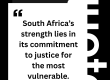
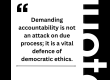
Yet, stripping a syndicate leader of his sports car is not the same as full justice. Five years
later, a gaping wound remains at the center of this tragedy: the masterminds walk free. While
six hired hitmen were sentenced in 2023, the political and administrative architects who
ordered and financed the hit have not been arrested or brought to trial. True justice cannot
stop with the foot soldiers. Leaving the planners unpunished sends a terrifying message to
every honest public servant: if you expose top-level corruption, you stand entirely alone.
This sense of institutional betrayal is actively compounded by the behavior of the Gauteng Department of Health. While Babita received bullets for protecting public funds, her direct superior, former CFO Lerato Madyo—the person who ignored Babita’s desperate final text warning that her life was in danger—was not fired or criminally prosecuted. Instead, earlier this year, it was exposed that the department quietly granted Madyo a lucrative, confidential “golden handshake” settlement to exit public service in secret. The state effectively used public funds as hush money to shield a compromised executive, all while the department’s newly appointed Head of Department, Arnold Malotana, faces an active SIU lifestyle audit and bribery probe.

The systemic rot has not been cleared out. The latest Auditor-General’s report shows that the
Gauteng Department of Health failed all nine assessed internal control areas, clocking up
R2.7 billion in irregular expenditure. Meanwhile, paralyzed by a total lack of political will
and structural leadership, the department returned R1.1 billion unspent to the National
Treasury. Our hospitals are falling apart, yet billions meant for life-saving care are sent back
because the procurement system is fundamentally broken.
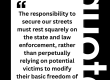
We can no longer honor Babita Deokaran with empty rhetoric and annual candlelight vigils.
True remembrance requires systemic change.
First, the Gauteng Provincial Government must immediately modernize its supply chain
management. We must scrap the legacy systems that allowed the split-invoicing loophole to
exist and replace them with an automated, transparent, real-time digital tracking system. All
207 front companies named by the SIU must be permanently blacklisted across every organ
of state. Furthermore, we must introduce a strict legislative ban on confidential separation
packages for any official under financial investigation.
Second, Parliament must urgently pass legislation that will rewrite South Africa’s broken
whistleblower legislation. The current Act is a reactive tool that fails whistleblowers because
it treats them like criminal witnesses rather than honest citizens.
Thirdly, We need a standalone, fully independent Whistleblower Protection Unit that provides
proactive physical security, legal support, and financial sanctuary the moment a disclosure is
made.
A permanent bronze bust honouring Babita was recently unveiled at her childhood home. But
her true monument cannot be made of stone. Her true monument must be a cleaned-out,
transparent, and uncompromised South African state.
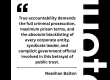
Five years later, the protective political covers must be permanently removed. We must
dismantle the tender syndicates, imprison the masterminds, and ensure that no South African
ever has to choose between their life and their integrity again.