
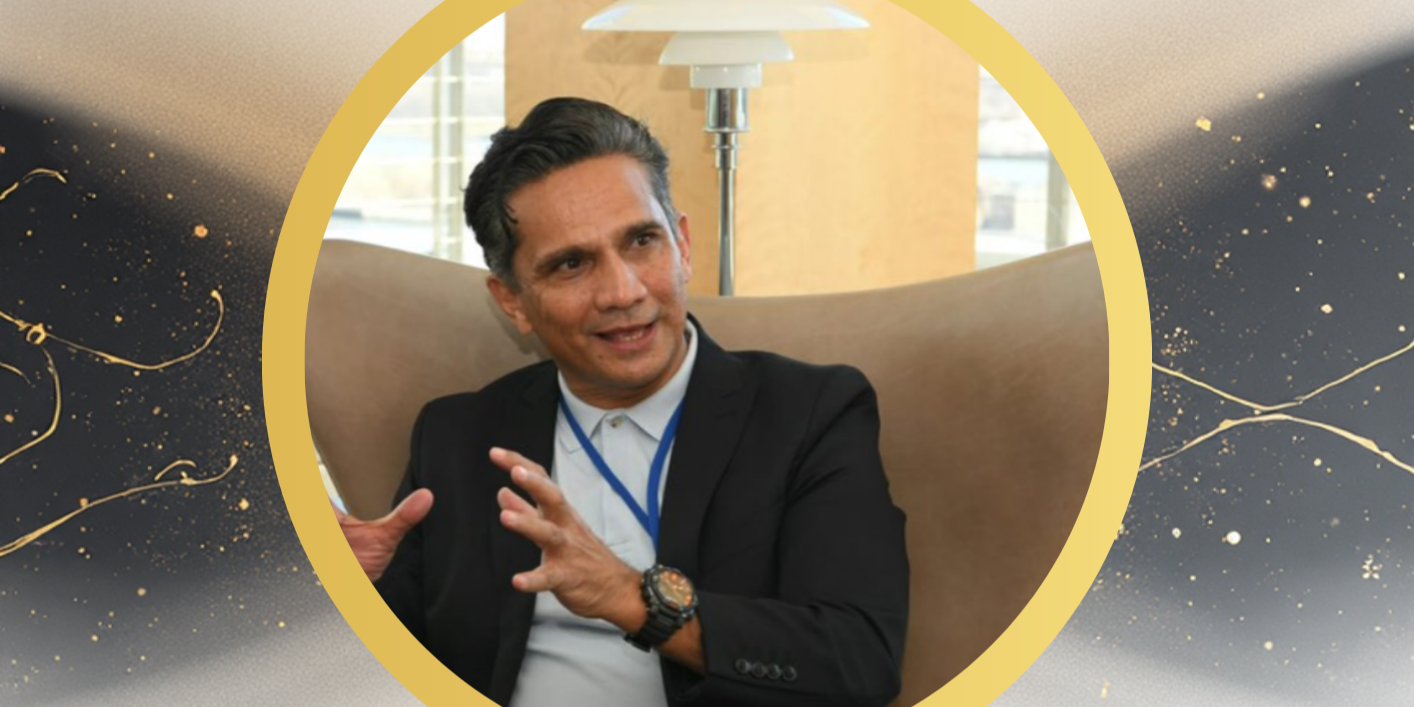
By: Zane Dangor
Thanks and gratitude to the Board and staff of the Kathrada Foundation to ask me to do the talk this year. It is truly and honour and I am humbled. I will try to do justice to the theme but from the outset I must indicate that significant minutes would be dedicated to the situation in Palestine, as what is happening there is a window to the fissures in global politics, diplomacy and values. The manner in which this genocide is dealt with will shape global politics and international governance.
I will start with a discussion on War and Peace.
South Africa’s foreign policy trajectory can be viewed in the context of historical global political cultures. As a nation we have navigated a complex global environment, having emerged from being a global pariah to one of the more prominent actors on the global stage.
Recently the icon of ‘realism’, Henry Kissinger, passed away. He had been awarded the Nobel Peace Prize in the 1970s for helping to negotiate a ceasefire in Vietnam. This was a war that he both helped escalate and then end. Sound familiar?
Kissinger’s approach was in keeping with the dominant global political culture which still prevails. The ‘realism’ which Kissinger championed is a fancy diplomatic word for explaining why we need to accept war and injustice as part of the management of relations between countries.
Kissinger and those who thought like him supported the idea that the powerful in the world had to use force to shape the world according to their interests. He supported wars, irrespective of whether they were lawful, as long as they achieved some political objective. Kissinger was a leading advocate for the United States not to be a party to the Rome Statute as he did not feel that the US needed to be accountable for its actions in the international arena.
Kissinger was just a very eloquent proponent of a centuries old culture that celebrates violence and warfare.
We need to refocus the locus of international relations on values that prioritize the dignity and equality of all people. Jonathan Schell, in his seminal book entitled, “The Unconquerable World”, writes about two competing impulses in humanity.
The impulse for war and plunder and the opposing impulse for peace and serenity. He cites the poetry of Dryden, who glorified the wars of the Roman Empire, through his words, “Of Arms and the man I Sing”. This edified a martial tradition and indeed a martial system, where at best, people and societies stood up for principles using force, but where generally, it exemplified plunders, exploitation and massacres.
The martial tradition is further edified through forms of popular culture. This includes film and TV shows that portray those who have been engaged in warfare in foreign lands as heroes, irrespective of the nature of the particular conflicts. In the US for example, those who did the most ‘tours’ in Afghanistan, Iraq or any of the many wars that the US has been involved in over the last few decades, are regarded as among the ultimate heroes and patriots.
There is scant attention paid to the reasons for those wars, whether they could have been avoided, whether they were lawful and the destruction to people and critical infrastructure. Perhaps the most cynical portrayal of this dominant culture is the Marvel superhero , named Sabra that celebrates the murderous skills of Mossad and seeks to mobilise bias around the violence associated with an unlawful belligerent occupation.
Schell also, writes extensively on the opposing tradition which is centered around, peace, human rights and cooperative power as opposed to destructive violence. This culture is perhaps best exemplified by Jesus Christ, who sang about the man without arms and told his follower Simon (who was about to attack a servant of the High Priests who subsequently crucified Jesus), “Put back your sword. For those that live by the sword, shall die by the Sword”. Other notable proponents of this culture would be Mahatma Ghandi and the Satyagraha philosophy he helped to shape. I would also suggest that leaders such as Nelson Mandela, Ahmed Kathrada, Walter Sisulu and Desmond Tutu should be counted amongst those who championed a culture of peace and justice.
Sadly, as we are witnessing in Palestine, the Augustan tradition that sanctions and glorifies violence, plunder, and exploitation is dominant and has subdued the tradition discouraging violence. Humanity has not learnt lessons from the past. By now, we should have learnt over the centuries – whether during the two World Wars, or during colonialism (which includes racism, slavery and occupation) – that the use of force lays the basis for hatred that will only ensure forever wars. It is indeed an indictment on humanity that the last three decades have been described as the most peaceful in human history.
How can we mobilise bias around a human tradition of peace that is centred on justice and equality? Or are we wedded to the Clausewitzian ethos that war is politics by other means? In fact, Clausewitz wrote that the perfect war was one without friction where one’s enemy is completely subdued. These ‘frictions’ included politics, which Clausewitz argued tended to moderate the scale and intensity of wars. The horrors of the World Wars, especially World War II, led the United Nations to add in some more frictions, that is, international law, including international humanitarian law.
We may no longer have philosopher-prophets to guide us to peace, but we do have the frictions that we have developed to at the very least, determine when wars can be waged lawfully (jus ad bellum) and how to conduct ourselves during war (jus en bellum).
Israeli Prime Minister Benjamin Netanyahu was warmly welcomed on Capitol Hill in the US and also in Greece. This is despite a request by the Chief Prosecutor of the ICC for arrest warrants for him and his Minister of Defence for crimes against humanity. Netanyahu’s welcome by public representatives on the Hill and in other so-called “responsible states” that profess to respect international law and human rights law has created a significant crisis in international governance. Is this disregard of norms and laws because Palestinians are the victims, and Israel the perpetrator?
These are the same norms and laws that supposedly framed the discussion at the Peace Summit on Ukraine that was hosted in Switzerland in 2024. South Africa helped shape those agreements since the so-called ‘Ukraine Peace Formula’ talks began in Copenhagen in 2023. These values that was centered on human rights and international legal norms were negotiated and agreed to at the G20 in New Delhi, India in September 2023. They were also reaffirmed at the G20 Summit in Rio last year but it was much more difficult to get to a consensus. The consensus at both Summits included explicit prohibitions on the annexation and acquisition of land through the use of force.
Western countries supported this language in 2023 as it was largely negotiated in the context of the Russia/Ukraine war. Not surprisingly, following the events in Palestine after 07 October 2023, the Western diplomatic default position was restored. That is, these laws and norms do not apply to Israel or any actors that are deemed to be part of the West’s sphere of influence. Diplomats from countries of the South have long regailed against that the double standards displayed in the implementation of international norms and laws, but the most recent differential approach taken in the wake of a genocide in Palestine as opposed to Ukraine has been so crude that it has the potential to completely dismantle the international legal order.
As we negotiate the Leaders Declaration for the G20 Summit chaired by South Africa, we do so aware that the G7 Declaration this year did not make reference to international law. We also note that some western delegations are making submissions that geopolitical references in this year’s G20 declaration should also not make reference to international law.
At the root of this differential approach to international legal norms is the global martial culture that is in lock-step with the political traditions of former colonial powers. This was discussed by the South African legal team at the ICJ hearings in the Hague.
Vaughn Lowe, KC acting on behalf of the South African government at the ICJ, told the court the following:
“We have heard expressions of outrage that anyone could accuse Israel of acting in this way. We have heard sober assurances that Israel was doing and would do everything in its power to avoid civilian deaths as it exercised its claimed right of self-defence. We have heard boasts that Israel’s army is the most moral army in history. We have heard flat denials that there is famine in Gaza. For months people, particularly in the west, have appeared unwilling to accept that the accusations are true. How could people who look like us and sound like us possibly engage in anything like genocide?”
The answer to the question we posed was offered to the Court as part of pleadings by Ambassador Vusi Madonsela was the following:
These questions “stem from a form of amnesia and denial by former colonial powers in relation to the crimes associated with colonial violence perpetrated against indigenous peoples. This includes the denial of genocide. This denial is clearly at play in Palestine.”
This denial of atrocities by Israel and the tacit condemnation of the horrific killings of Palestinians has led to the question: Does the West believe that Palestinian lives matter less than Israeli, American, or European lives?. By extension, it begs the question whether the ideologies of superiority that justified colonial conquests, occupations and genocides in Africa and other parts of the world still determine which people are deserving of protection by international human rights law and the international legal framework. This is not an outlandish assertion. Recently the Prosecutor of the International Criminal Court, who is being sanctioned by the United States, stated that in his engagement with US senators and congress people, he was told that the ICC was not meant to hold the leaders of Israel accountable, as the Court was designed for Africans and others.
This institutionalised impunity for the powerful is steeped in the history of colonialism and indicates that martial culture referred to by Schell is not only persistent but is condoned when the victims are the international law sub-alterns, that is, ‘non-western’ people and countries. War and international law are only invoked when the victims are ‘western’.
This martial culture poses a danger to all of humanity. Contestation for power, influence, resources and territory through the use of force, has the potential to destroy all of humankind and the planet that sustains us. The potential use of nuclear weapons in the current wars in Europe and the Middle East cannot be ignored.
We need a reset in global political culture that is catered on mutuality, cooperation, peace and justice wherein diplomatic actions seeks to build global well-being. That is, a world where the use of force is replaced by dialogue and negotiations, and where force is actually prohibited. This will require changes to the UN Charter. The same UN and its related institutions and norms must be reconfigured so that it is transformed from protecting previous empires to a system that regards all people and countries equally and is geared towards being the engine for inclusive development. This will assist in dealing with the root causes of conflicts.
This vision is not new. It formed part of the foreign policy vision of the very first post-apartheid administration in South Africa. In 1994, our international relations strategic stance was centred on ‘progressive internationalism’. This was layered by issues of South-South Cooperation and approaches to Peace, Security and Disarmament undergirded by a commitment to Human Rights. We foregrounded the issue of human rights as the experience of anti-apartheid struggle in South Africa, spotlighted the negative impact that collusion with the Apartheid regime had on the oppressed in South Africa and indeed the Southern African region. This collusion was practised under the colour of pragmatism and realism. This collusion was most visible with Thatcher and Reagan’s ‘constructive engagement’ policies in relation to the apartheid regime.
The impact of this defacto ‘realism’ by these countries served to prop up the Apartheid government with disastrous repercussions for black South Africans and our allies in the then front-line states. This experience chastened us to state, at least on paper, that issues of expediency and narrow economic considerations in our foreign policy would not govern a democratic South Africa. We sought to be a country that would act in solidarity with all peoples who face oppression and discrimination. This included raising our voices in opposition to our allies when they discriminate against their own people based on issues of gender and sexuality, and stridently supporting those still under the yolk of colonialism and occupation.
At some point, this idealism in our foreign policy stance was supplanted by an unstated ‘constructivist’ approach, which was code for ‘realism’ that weakened our normative human rights framework and led to inconsistent actions in the international arena. Over the last 7 years, we have recalibrated and have reset the normative stance. This has led to some in the international community, now, referring to South Africa as the moral super-power. Whether this tag is accurate or not, the expectation to fulfil this vision is one that we need to aspire to fulfil over the next five years. Perhaps, with other middle power countries we can transform the global political landscape to be peace- centered and rights driven. For South Africa, this will require consistency in our diplomatic practise. This is not too difficult, as our mandating environment is conducive to this. This mandating environment is foremost to be found in the South African constitution which shapes our national interests and characteristics which have all largely been informed by a collective history of struggle against colonialism and the denial of rights based race, religion, gender, sex, sexual orientation and origin amongst others.
These values embedded in the South African constitution places a duty on us to aspire to being a moral global citizen. This mandating environment provides us with a legitimate explanation to some of our colleagues from within the blocs we are active in, that may have different perspectives. This value based foreign policy stance that we are mandated to execute, given our history us, can help us move away from often-simplistic definitions of being constructivist, realists or idealists.
I raise the issue of realism as it is seen by many as the preferred approach to safeguard our economy from economic shocks and threats, including unilateral tariffs. While there has been some international pressure for South Africa, to abandon its case at the International Court of Justice, the internal pressure has been more significant.
It is therefore important to elaborate more on this.
Israel declared a state of war following Hamas’ attacks on Southern Israel on 7 October 2023. Israel’s conduct following the 7th of October prompted South Africa to institute an application against Israel before the International Court of Justice (“ICJ” or “Court”) on 29 December 2023.
South Africa argued that Israel’s conduct following the October 7th attack amounted to violations of the Convention on the Prevention and Punishment of the Crime of Genocide (“Genocide Convention”) in Gaza and requested to the Court to indicate provisional measures orders. We took a contentious approach we sort to use the rules of the court to prevent and punish those perpetrating a genocide. Prevention is a cornerstone of the Genocide Convention.
On 26 January 2024, the ICJ ordered several provisional measures. South Africa again approached the Court due to Israel’s non-compliance and the Court ordered further provisional measures on 28 March 2024 and 24 May 2024.
The Court ordered Israel inter alia to take all measures to prevent the commission of acts of genocide and ensure that humanitarian aid reaches Palestinians. Israel has been ordered to halt its military offensive, which order relates to the whole of Gaza and Israel. This was a judicial call for a ceasefire. There have been numerous resolutions calling for a ceasefire at the UNSC, over the last two years which have been vetoed initially by a group of Western countries and latterly solely by the US delegation.
At the time of instituting the ICJ proceedings which coincided with calls for an immediate ceasefire by South Africa, others in the Global South, by Palestinians and civil society formations, the following facts on the ground prevailed:
- 21,000 Palestinians in Gaza were killed.
- Entire multi-generational families wiped out.
- Over 355,000 homes, more than 60% of Gaza’s housing stock, damaged or destroyed.
- 1.9 million Palestinians, +/- 85% of the total population, internally displaced, forced to live in makeshift tents in camps with no water, sanitation or other facilities.
- Israel bombed, shelled and besieged Gaza’s hospitals, bringing the healthcare system to collapse. Contagious and epidemic diseases were rife amongst the displaced Palestinian population.
- The entire population in Gaza was at imminent risk of famine.
As of 6 September 2025, a few days before those who vetoed and blocked all calls for a ceasefire and indeed supplied arms to the Israeli offensive against Gaza, the following facts on the ground were reported:
- 67139 Palestinians were killed. These are the figures for those where names and IDs can be recorded. The vast majority of these were civilians of which over 20,000 are children. These numbers do not factor in those missing.
- 2700 families were erased from the civil records, due to them being killed by the Israeli forces.
- 5943 families were killed where there is only one known survivor, from each family. The surviving family members are mostly children.
- More than 4000 Palestinians had an amputation of one or more of their limbs.
- 1670 medical doctors and other medical professionals were killed an hundreds were injured.
- 254 journalists were killed.
Famine has been confirmed in Gaza. Nearly the entire population are facing acute food insecurity. Severe fuel shortages are crippling water production in Gaza and severely impacting crucial and live saving health services. Insufficient aid is reaching Gaza, a clear violation of the provisional measures orders. Israel launched the Gaza Humanitarian Foundation (GHF) which militarised the distribution of aid – hundreds of Gazans are being killed and thousands injured whilst waiting for food.
It is important to reflect on this as we welcome the current ceasefire, ironically, brokered by some of the same actors that enabled the current devastation in Gaza. We must all welcome this long overdue ceasefire and insist that it be the basis for a just peace that does not reward those most responsible for perpetrating a genocide or those who enabled it.
The UN Special Rapporteur on the situation of human rights in Palestine published a report in July 2024, “Anatomy of a genocide”, detailing the patterns of violence carried out by Israel and concluding that the threshold for genocide has been met.
Professor Wiliam Schabas, one of the world’s leading international expert on genocide, has stated that the ICJ case is “arguably the strongest case of genocide ever brought before a Court”.
The International Association of Genocide Scholars (comprising around 500 members worldwide, including several Holocaust experts) has concluded that Israel’s policies and actions in Gaza amount to genocide.
The Independent International Commission Of Inquiry On the Occupied Palestinian Territory published its report that what is taking place in Gaza is a Genocide.
B’Tselem, Human Rights Watch, Amnesty International, Israeli Physicians for Human Rights.
I am dwelling on this as Israel’s disregard for binding international laws, and stubborn exceptionalism to accountability for breaches of all international law and norms is destroying the foundations of the international legal order. Instead, there are efforts to silence those that criticise Israel’s conduct through, for example sanctions implemented against ICC judges and United Nations appointed Special Rapporteurs, threatens to derail the very institutions created to ensure accountability.
The question what is that we should do?. Does ‘normal’ diplomacy count in the midst of a genocide?. Is realism the leit motif for ‘normal diplomacy’?. I would suggest that we must confront a different reality. That is, that most of the international community’s foreign policy actions have served to at best, maintain the status quo while others actively played a role in enabling the genocide through rationalizing Israel’s actions as “self-defence’ and through decades of allowing Israel to breach international law with impunity.
I will conclude with some brief comments on genocide denialism.
Adam Jones in his 2006 publication entitled, “Genocide- A Comprehensive Introduction”, outlines the manner in which in all genocides, there have been what is termed the ‘discourse of genocide denialism’. He writes that much of this denialism was prominent in the Holocaust. Let’s list some of them:
- Hardly anybody died: reports of atrocities and mass killings are depicted as exaggerated and self-serving.
- It was self -defence: murdered civilians, especially adult males are depicted as ‘rebels’, ‘brigands’ and ‘terrorists’.
- The deaths were not intentional – this was particularly prevalent in denials of indigenous genocides where disease and other factors associated with systemic violence and oppression were also factors.
- There were not that many people to begin with: again, most prominent in indigenous genocides.
- We are the real victims….
This form of denialism has been prominent in the current genocide on Palestinians who are the indigenous people of Palestine. I raise this as it is important to deconstruct the manner in which this genocide is rationalized and justified.
If we allow a form of diplomatic practice that allows the perpetrators of this genocide to get away with it, because it now suits them to halt the carnage, we lay the basis for more impunity, death and destruction by state actors for decades to come.
To end the carnage in Palestine, Sudan, the DRC and in Europe, all of us must actively mobilise bias around a tradition of peace and justice. This will require diplomacy centered on human dignity and not self- serving narrow interests.
Lastly, given the recent farce surrounding the Nobel Peace Prize, perhaps the Kathrada Foundation working with others, like the Nelson Mandela Foundation can come together to host a new more credible Peace and Justice Prize.
I thank you.


